After the Budget: Where Could Better Energy and Resource Management Help?

 After the Budget: Where Could Better Energy and Resource Management Help?
You could be cutting spending in one part of your business while paying for waste in another.
Heating runs when rooms are empty. Materials arrive in quantities you cannot use. A damaged order needs to be made again, with more power, more stock and more time.
Each cost may look small on its own. Together, they can put pressure on the money you need for staff, equipment and growth.
After a Budget, it is natural to look closely at new costs and changes that affect your plans. Give the costs already inside your business the same attention.
Better energy and resource management can start with a clear question: where are we paying for something that brings us little value?
That question could lead you to a faulty timer, a stock problem or a work method that causes repeated mistakes. Finding the cause gives you something useful to act on.
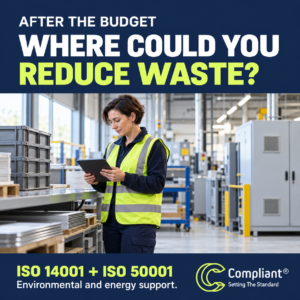
ISO 14001 and ISO 50001 offer ways to make these reviews part of how you run your business. Used well, they can help you plan improvements, give people clear roles and check the results.
Start your review by separating confirmed Budget measures from wider business concerns. Record which announcements apply to you, when they take effect and who will check the details.
If a measure changes a cost in your plans, update that cost using the confirmed information. If a possible source of support is relevant, check the full terms before allowing for it in your spending.
Then bring the discussion back to your own work. Which energy uses are understood? Where do materials go? What do you keep buying, replacing or throwing away?
A Budget review can be a useful reason to bring these questions to the same table. Ask the people who manage money, buildings, buying and day-to-day work to share what they know.
Their records may tell different parts of the same story. A purchasing report shows what came in. A waste record shows what left. Staff can explain what happened between those points.
ISO 14001 covers how a business manages its effect on the environment. This includes resource use, waste, environmental goals and relevant legal duties. The current edition, ISO 14001:2026, provides a framework for reviewing and improving that work.
For your business, the review might include water use, packaging, material damage or the way you manage waste. The important areas will depend on the work you do.
An office and a food business will have different needs. So will a warehouse and a building firm. Start with the parts of your work that matter most.
ISO 50001 focuses on energy. It helps businesses understand their use, set goals, measure results and keep improving. It can work alongside ISO 14001 within a joined-up approach to managing the business.
This gives you a way to look more closely at heating, lighting, fuel and equipment. You can then connect that work with your wider plans for materials, waste and environmental improvement.
Take a simple example. Imagine a business that keeps having to remake damaged products. Investigating the cause could help it reduce wasted materials and the energy used to make replacements.
The buying team might need to check how materials arrive. Staff may need a better way to store them. The operations manager could review where the damage first appears.
Looking at the problem together makes it easier to choose a useful response. Buying less stock alone might leave the same damage problem in place.
For energy, begin with the records you already have. Bills and meter readings can help you see patterns and investigate changes in use. The Carbon Trust recommends regular measurement and comparisons that reflect the work being done.
Check the amount of energy used as well as the amount paid. A bill can change because the price changes, because use changes, or because both change.
Keep those figures clear in your review. It will help you understand whether an improvement has reduced use and how that affects the cost.
Make comparisons fair. Note changes in working hours, weather, output and the space you use. These details help explain a result that might otherwise look better or worse than it is.
You may find gaps in the records. Perhaps one meter covers several buildings, or invoices are held by different teams.
Record what you know and what still needs checking. Give someone the task of closing each useful gap. Choose information that will help you make a decision.
A workplace walk can help connect the figures with real activity. The Carbon Trust highlights heating, lighting, office equipment and factory systems as useful areas to review for energy-saving opportunities.
Look at when equipment runs and what work it supports. Ask whether heating times match the hours people use the space. Check who can change settings and who deals with faults.
Agree any changes with the people responsible for the equipment. Some systems must remain on to protect products, safety or essential services.
The aim is to understand what is needed and where use could be avoided. Staff need clear instructions they can follow during a normal working day.
Imagine a small office that changed its opening hours but kept the old heating schedule. A review might find that the building is being heated well before anyone arrives.
The team could agree a suitable new schedule, keep a record of the change and check comfort as well as energy use. If the result is poor, they can adjust it.
That is a practical improvement with a clear reason behind it. There is a starting point, a planned action and a way to judge whether it helped.
Use the same care when reviewing materials. Find out what you buy, how much reaches its intended use and what becomes waste.
Leeds City Council’s business guidance recommends checking waste types, amounts and disposal costs, then looking at ways to reduce, reuse or recycle each material.
For a first review, choose one material you use often. Follow it from the order through delivery, storage, use and disposal.
Ask staff where losses happen. A damaged pack, unclear work instruction or poor handover may deserve closer attention.
You could discover that the buying decision looks sensible in isolation but creates a problem elsewhere. A large order may bring a lower price per item while leaving stock that is hard to store or unlikely to be used.
The useful question is how much value the whole order brings to the business. Include the goods used successfully and the costs linked to anything left over.
Try this with a fictional workshop. It orders more material than it needs for each job because staff have no agreed way to check what is already available.
Useful pieces remain on a shelf while new stock arrives. Over time, the shelf becomes crowded and nobody feels sure what can be used.
A first change could be to agree how remaining material is labelled, stored and checked before another order. The team could trial the method on one type of material.
At the review date, they could check how much unused stock remains and whether buying decisions have improved. Staff should also explain whether the new method is easy to follow.
The wider environmental value matters too. Government research on resource efficiency explores how reducing waste and keeping products and materials in use for longer can reduce emissions.
Your review can include what happens before goods reach you and after they leave. Ask suppliers about packaging, repair options and ways to return suitable items.
Give each idea a clear purpose. If you are exploring reusable packaging, check whether it suits the product, the customer and the delivery route.
A useful trial might compare the full process with the current method. Include handling, storage, damage and any extra steps staff need to take.
Look for changes that fit the work. A choice that sounds good in a meeting still needs to work when orders are busy and people are under pressure.
Water can be another useful part of the review. Where it matters to your work, check what information you have about use and who investigates unexpected changes.
Give buildings and maintenance teams a place in the discussion. Buying records alone will not show how well a system is working or why people use it in a certain way.
Bring these findings into your spending plans. You may have several possible improvements, each with a different cost and a different reason for doing it.
Choose a small number that you can explain clearly. Consider the size of the problem, the likely benefit, the effort involved and any effect on people or customer needs.
For a proposed equipment purchase, ask how the expected result has been worked out. Compare it with your own hours, use and conditions.
An estimate based on a much busier site may be less useful for your business. Ask the supplier to show which assumptions apply and which need changing.
Include the costs of installation, training, maintenance and any time the work may stop. Consider how long you expect to use the equipment and what happens to the item it replaces.
These questions give the people approving the spend a clearer picture. They can judge the project against the problem you are trying to solve.
If a Budget measure could support the project, confirm the details before committing on that basis. Keep the business case clear enough to show how the project would work under the terms that apply.
You can also plan improvements that use existing tools or work methods. A better handover or stock check may deserve attention alongside a larger investment.
Be clear about what each action needs. Even a change with little spending can require staff time, training or a maintenance visit.
Give that time a place in the plan. Otherwise, an agreed improvement can sit on a list while everyone returns to their usual workload.
People need a clear role in energy and resource management. Decide who gathers the figures, who checks them and who has the authority to approve a change.
Ask the people doing the work for their views before choosing a new method. They may spot a practical problem that is easy to miss from a report.
For example, imagine asking warehouse staff to use less packaging without checking why they use the current amount. They may explain that products have been arriving at customers damaged.
That information changes the task. The team needs to review protection, handling and packaging together, then test a suitable option.
The discussion should make it easier for staff to raise a concern. Give them a simple way to report repeated waste, unclear settings or a method that does not work.
When an idea leads to a change, explain the result. Staff can then see how their input helped and what they need to do next.
Keep goals clear enough to check. A broad wish to be more efficient gives people little direction.
Choose a goal linked to a problem you have measured. You could focus on reducing a known type of material loss or avoiding energy use during agreed periods.
Set a realistic target using your own evidence. Record the starting point, the action, the person responsible and the review date.
Choose a measure that fits the work. A business making products may need to relate energy or waste to the amount made. Another business may need a different comparison.
ISO 50001 supports this use of measures to track energy performance. It also gives senior leaders a role in providing the resources needed for improvement.
At the review, check what actually changed. Look at the records and ask staff how the new method worked.
If results fall short, investigate why. Perhaps the change was only used on one shift, the starting figures were unclear or the equipment needed further attention.
Use what you learn to decide the next action. A disappointing result can still give you useful information if you examine it honestly.
Keep records that help the next person understand the decision. A brief note can explain the problem, the change made and the outcome.
This is particularly useful when staff move roles or work changes. The business should be able to explain why a setting, buying rule or work method is in place.
You can bring energy and environmental work into shared meetings and action plans while keeping the needs of each standard clear. Decide which records can be shared and where a more detailed review is needed.
Include what you can control when choosing the first actions. A business that rents its premises may need to agree a building change with the landlord or the person who manages the site.
That should form part of the plan. Record who needs to be involved and what information will help them make a decision.
Suppose your team shares a building with another business. You notice that an agreed closing routine would need input from both teams.
Before setting a goal, find out who manages the shared areas and who can approve the routine. Your staff should know which actions belong to them and where to raise a problem.
The same care helps when work depends on a supplier or contractor. Agree what you need them to do, when you need it done and how you will check the result.
This makes the action more realistic. It also gives the person leading it a clear route to follow when the next step needs someone else’s input.
For your first month after the Budget, arrange one focused review. Gather the confirmed measures relevant to your business, along with the energy, buying and waste records you already hold.
Choose one energy issue and one resource issue worth investigating. Give each a responsible person and enough time to check the cause.
Agree the first actions and how you will measure them. Book the review date while everyone is still at the meeting.
That gives you a manageable place to start. Later decisions can build on what the first review tells you.
If you are considering certification, discuss how the system will fit your business. ISO 50001 can be used with or without certification; some businesses choose certification to show others that they have an energy management system in place.
Compliant can help you review your current arrangements, develop your management system and prepare for a check by an independent certification body. Its ISO support includes internal reviews, audit preparation and ongoing help as the system becomes part of daily work.
For ISO 14001 and ISO 50001, the discussion can begin with your existing records, your main concerns and what you want to improve.
You may be starting from scratch, reviewing an established system or looking at how to bring energy and environmental work closer together.
A clear review can help you see where support would be useful and which steps deserve attention first.
Speak to Compliant about your certification plans. Find out how environmental and energy management support could help you turn your next business review into a practical plan for reducing waste and making better use of what you buy.