Skip to main content
Skip to footer
Skip to main content
Skip to footer

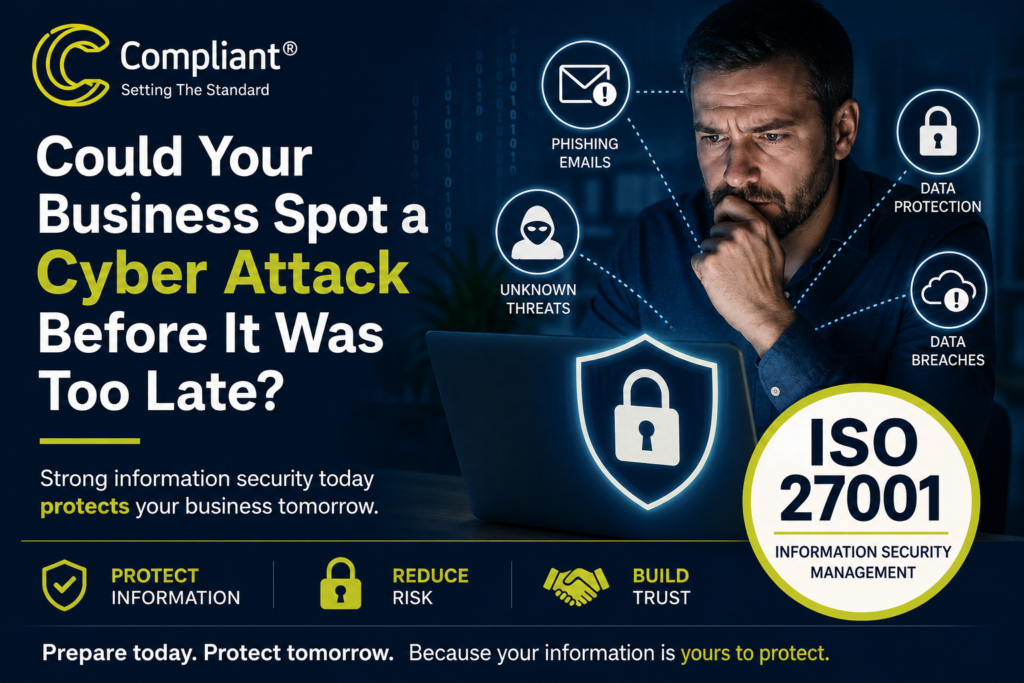
Could Your Business Spot a Cyber Attack Before It Was Too Late?
Could Your Business Spot a Cyber Attack Before It Was Too Late?
Every Business Thinks It Will Never Happen. Until It Does.
Your business is running well. Staff are working hard. Customers are happy. Orders are coming in.
Then, without warning, everything changes.
A member of staff clicks what looks like a normal email. A password is stolen. Customer information is copied. Systems stop working. Phones begin ringing. Clients want answers. Your team does not know what to do next.
This is how many cyber attacks begin.
The worrying part is that many businesses never see the warning signs. They believe cyber criminals only target large companies with huge budgets. The truth is very different.
Small and medium-sized businesses are often seen as easier targets because they may have fewer controls in place.
The cost is not always measured in money. It can damage your reputation. It can stop work for days. It can break customer trust that has taken years to build.
That is why ISO 27001 has become one of the most important standards for organisations that want to protect their information and reduce risk.
In this guide, you will learn why Cyber Security is now a business priority, how ISO 27001 helps organisations prepare for threats, and the benefits of an ISO consultant’s support throughout the journey.
Cyber Security Is No Longer Just an IT Problem
Years ago, many businesses believed cyber security belonged to the IT department.
Today, that way of thinking is dangerous.
Every person within a business handles information in some way. Whether it is customer details, supplier records, financial data or employee information, every member of staff plays a part in keeping it safe.
Cyber criminals know this.
They often look for the easiest way in. That could be:
- A weak password
- An email that tricks an employee
- An old computer without updates
- A lost laptop
- An unsecured mobile phone
- Poor control over who can access files
Technology matters. People matter just as much.
ISO 27001 helps organisations understand where these risks exist before they become serious problems.
What Is ISO 27001?
ISO 27001 is the international standard for information security management.
Rather than focusing on a single piece of software or one security product, it helps businesses build a complete system for protecting information.
It encourages organisations to ask important questions such as:
- What information do we hold?
- Who can access it?
- What could go wrong?
- How likely is that risk?
- What controls should we put in place?
- How will we respond if something does happen?
This creates a structured approach instead of relying on guesswork.
The aim is simple.
Protect information. Reduce risk. Keep the business running.
Could You Spot the Warning Signs?
Many cyber attacks do not happen instantly.
There are often clues.
The problem is that businesses do not always recognise them.
Examples include:
- Staff receiving unusual emails asking for payments
- Login attempts from unknown locations
- Computers running much slower than normal
- Files suddenly disappearing
- Unexpected password reset requests
- Strange software appearing on devices
- Customers reporting unusual messages
These signs may seem small.
Ignoring them can lead to much bigger problems.
ISO 27001 encourages organisations to monitor systems, report unusual activity and act quickly before small issues become major incidents.
The Real Cost of a Cyber Attack
When people think about cyber crime, they often think about stolen money.
That is only part of the picture.
A cyber attack can also lead to:
Lost Productivity
Employees cannot work if systems are unavailable.
Projects stop.
Orders are delayed.
Deadlines are missed.
Damaged Reputation
Customers expect businesses to protect their information.
If that trust is lost, winning it back can be extremely difficult.
Financial Losses
There may be costs linked to:
- Recovering systems
- Replacing equipment
- Legal advice
- Customer communication
- Business interruption
- Insurance claims
Regulatory Problems
Businesses that handle personal information have legal responsibilities.
Failing to protect data may lead to investigations and possible penalties.
Stress Across the Organisation
Cyber incidents affect everyone.
Managers face difficult decisions.
Employees worry about mistakes.
Customers demand answers.
The impact often lasts much longer than the technical problem itself.
Why Businesses Need a Planned Approach
Many organisations buy antivirus software and believe they are protected.
While security software is important, it is only one piece of the puzzle.
Good cyber security also includes:
- Clear policies
- Staff awareness
- Risk assessments
- Secure passwords
- Access controls
- Regular backups
- Incident response planning
- Supplier checks
- Ongoing reviews
ISO 27001 brings all these areas together into one management system.
Instead of reacting after something goes wrong, businesses begin preventing problems before they happen.
People Are Often the First Line of Defence
Technology cannot stop every attack.
People make the difference.
Many successful cyber attacks begin with human error.
Someone opens the wrong email.
Someone shares information without checking.
Someone uses the same password for multiple systems.
These mistakes are understandable.
That is why regular training is essential.
Employees should know:
- How to recognise suspicious emails
- Why strong passwords matter
- When to report concerns
- How to protect sensitive information
- What to do if something feels wrong
A culture where people feel comfortable reporting concerns can stop an attack before it grows.
ISO 27001 encourages organisations to build that culture.
Risk Assessment Is at the Heart of ISO 27001
Every business faces different risks.
A manufacturer has different concerns from an accountant.
A construction company has different risks from a healthcare provider.
ISO 27001 does not use a one-size-fits-all approach.
Instead, organisations identify:
- Their information assets
- Possible threats
- Areas of weakness
- The chance of something happening
- The impact if it does
Once these risks are understood, businesses can decide which controls are needed.
This means time and money are focused where they will have the biggest effect.
What Happens If an Attack Still Happens?
No organisation can promise that a cyber attack will never happen.
Even large global companies experience security incidents.
The difference is how prepared they are.
ISO 27001 helps businesses create an incident response process.
This means staff know:
- Who to contact
- How to contain the problem
- How to recover systems
- How to communicate with customers
- How to record what happened
- How to prevent it happening again
Preparation reduces confusion.
It also helps businesses recover much faster.
Building Customer Confidence
Customers share information because they trust your business.
That trust must be earned.
Increasingly, organisations ask suppliers about their cyber security before awarding contracts.
Many tenders now include questions about information security.
Holding ISO 27001 certification demonstrates that your organisation takes information protection seriously.
While certification does not guarantee complete security, it provides independent evidence that recognised good practices are in place.
This can strengthen relationships with customers, suppliers and partners.
The Benefits of an ISO Consultant’s Support
Implementing ISO 27001 can feel overwhelming, especially for organisations doing it for the first time.
There are policies to create.
Processes to review.
Risks to assess.
Evidence to collect.
Many businesses choose to work with an experienced consultant because they want confidence that they are moving in the right direction.
Some of the key benefits of an ISO consultant’s support include:
Clear Guidance
An experienced consultant explains what the standard requires in simple language.
This helps remove uncertainty.
Saving Valuable Time
Instead of trying to interpret every requirement alone, businesses receive practical advice based on experience.
This allows teams to focus on running the business.
Building the Right System
Every organisation is different.
A good consultant helps develop a management system that reflects how the business actually works rather than creating unnecessary paperwork.
Identifying Gaps Early
Experienced consultants often spot missing controls before they become problems during certification.
Finding these gaps early makes implementation much smoother.
Supporting Staff
People are central to ISO 27001.
Consultants can help employees understand their responsibilities and build confidence throughout the organisation.
Preparing for Certification
Before the external audit takes place, consultants help ensure documentation, evidence and processes are ready.
This reduces stress and improves readiness.
The goal is not simply achieving certification.
It is creating a stronger, more secure organisation.
ISO 27001 Supports Continuous Improvement
Cyber threats change every day.
New scams appear.
New technology creates new risks.
Businesses change too.
Staff join and leave.
Systems are updated.
Services expand.
That is why cyber security cannot remain static.
ISO 27001 encourages continual improvement.
Organisations regularly review:
- Risks
- Controls
- Incidents
- Audit findings
- Business changes
- Customer expectations
This ongoing cycle helps businesses stay prepared as new challenges emerge.
Simple Steps Every Business Can Take Today
Whether or not you are already working towards ISO 27001, there are practical actions you can begin immediately.
These include:
- Review who has access to sensitive information.
- Encourage strong, unique passwords.
- Enable multi-factor authentication where possible.
- Keep software updated.
- Back up important data regularly.
- Train employees to recognise phishing emails.
- Test your incident response plan.
- Review supplier security arrangements.
- Carry out regular risk assessments.
- Consider whether your current controls are enough for today’s threats.
Small improvements made consistently can significantly reduce risk over time.
Looking Beyond Technology
Cyber security is about much more than computers.
It is about protecting your business.
Protecting your customers.
Protecting your reputation.
It is about making informed decisions before problems arise.
ISO 27001 helps organisations move from reacting to threats to managing them in a planned and structured way.
That change in thinking can make all the difference when a real incident occurs.
Final Thoughts
The question is not whether cyber threats exist.
They do.
The better question is whether your organisation is prepared to recognise them, respond to them and recover from them.
If the answer is uncertain, now is the time to review your approach.
Implementing ISO 27001 helps organisations understand their risks, improve Cyber Security, protect valuable information and strengthen customer confidence.
For many businesses, working with an experienced consultant also makes the journey clearer, faster and more effective. The benefits of an ISO consultant’s support extend beyond achieving certification. They help build systems that continue to protect the organisation long into the future.
Every organisation depends on information.
The businesses that protect it well are often the ones that remain trusted, resilient and successful.
Continue Learning
Cyber security is not something you complete once and forget. It is an ongoing journey.
Take time to review your current information security practices. Consider where your biggest risks may be, involve your team in improving awareness, and explore how recognised standards such as ISO 27001 can strengthen your organisation over time.
The more you understand your risks today, the better prepared your business will be for tomorrow.