Skip to main content
Skip to footer
Skip to main content
Skip to footer

ISO Certification: A Catalyst for Strong Stakeholder Relationships
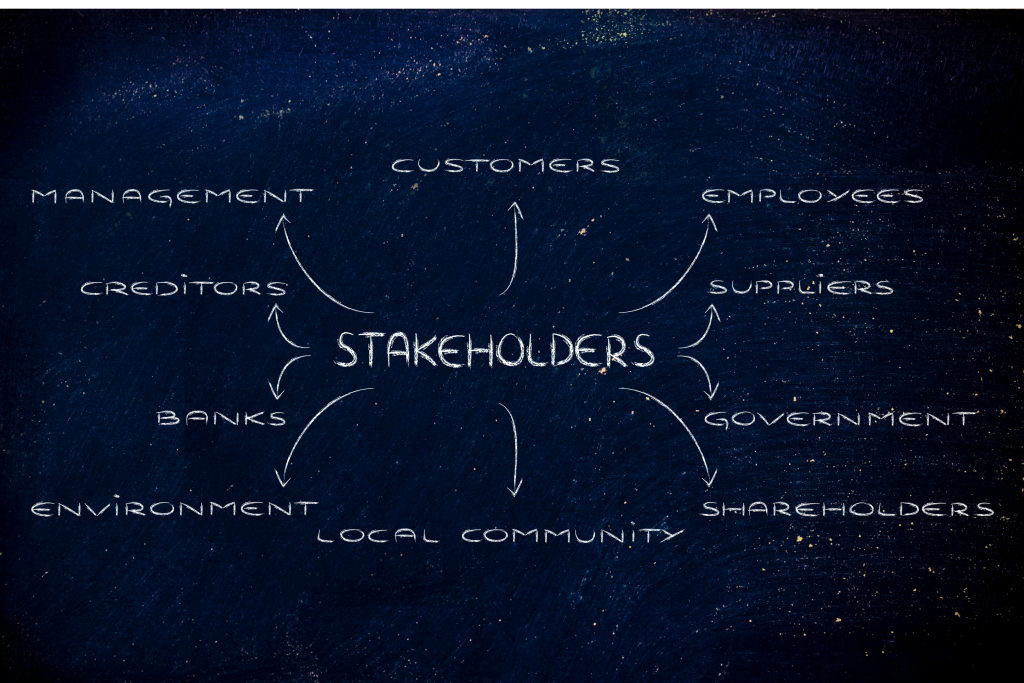
ISO management system certifications are often seen as technical compliance exercises, but they also play a strategic role in strengthening relationships with key stakeholders. Standards like ISO 9001 (Quality Management), ISO 14001 (Environmental Management), ISO 45001 (Health & Safety), ISO 27001 (Information Security), and ISO 22301 (Business Continuity) share a common framework that emphasises shared goals, documented processes, regular reviews, and continual improvement. By aligning an organisation’s practices with these internationally recognised standards, companies demonstrate a commitment to excellence that enriches relationships with customers, business partners and suppliers. In other words, ISO certification builds a foundation of collaboration, trust, accountability, and transparent communication that benefits everyone from internal staff to external partners.
Internal Staff: Shared Goals and a Culture of Trust
For employees, implementing an ISO management system fosters a more collaborative and trust-based workplace. ISO standards encourage “engagement of people” as a quality principle, leading to enhanced organisational trust and collaboration. Clear quality, safety, or security objectives are communicated to all levels, giving staff a unified sense of purpose and shared goals. Many standards also define roles, responsibilities, and training requirements, which improves accountability and ensures everyone understands how they contribute. The result is a workforce that feels valued and involved in a culture where team members are empowered to participate in improvements rather than work in silos.
Moreover, ISO frameworks nurture an environment of mutual respect between employees and management. For example, adopting ISO 45001 for occupational health and safety visibly demonstrates that leadership prioritises employee well-being, which in turn fosters a positive and productive work culture. When staff see that their company is serious about quality and safety (as required by ISO 9001 or 45001), their morale and loyalty increase. Over time, the continuous improvement ethos of ISO helps keep teams motivated. A “culture of quality and continuous improvement” empowered by ISO standards boosts morale and innovation, as engaged employees feel responsible for achieving the organisation’s objectives. In short, ISO certification strengthens the internal bond: employees trust their leaders’ commitment to high standards, and leaders trust employees to uphold those standards.
Auditors: Collaboration and Transparency in the Audit Process
Auditors – whether internal auditors or external certification auditors are key stakeholders in any ISO management system. The ISO approach transforms auditing from a dreaded inspection into a collaborative, learning-oriented process. Internal audits, as required by standards such as ISO 9001 or ISO 27001, encourage departments to collaborate in identifying issues and solutions, rather than assigning blame. This fosters a spirit of openness and accountability, as teams learn to view audits as opportunities for improvement.
External auditors (from certification bodies) similarly become partners in the organisation’s success when approached with the right mindset. Auditors are ultimately there to build relationships and help you meet your goals, barradvisory.com, not just to “police” the company. Successful companies therefore engage auditors in transparent dialogue sharing information, asking questions, and demonstrating willingness to correct any non-conformities. Seasoned ISO auditors often strive to create a comfortable audit environment and share best practices from the industry. They offer perspective and independent feedback that management can use to improve processes. Auditees, for their part, are encouraged to view the auditor as a “business partner” rather than an adversary. When both sides collaborate with mutual understanding, it leads to a more transparent and trusting relationship that ultimately strengthens the effectiveness of the audit and the management system. This partnership-based approach to audits reinforces accountability (since findings are openly addressed) while maintaining a respectful, two-way communication channel between the organisation and its auditors.
Clients and Customers: Building Trust Through Quality and Transparency
ISO certification has long been recognised as a trust signal for customers. Achieving standards like ISO 9001 or ISO 27001 shows that a company’s processes meet rigorous international criteria, which plays a pivotal role in building customer trust and enhancing brand reputation. glaciercs.com. Clients gain confidence knowing that an ISO 9001-certified supplier will consistently deliver quality products and services. They also appreciate the transparency that comes with ISO-compliant communication; for instance, ISO 9001 requires clear communication of product information and handling of customer feedback, which assures clients that their needs and concerns will be heard. This clarity and reliability encourage repeat business and long-term loyalty. In fact, ISO 9001’s focus on customer satisfaction explicitly aims to “foster long-term relationships that drive loyalty and trust”.
Beyond quality, other ISO standards address specific customer concerns that deepen trust. An ISO 27001 certification signals to customers that their data is handled with top-notch security controls, alleviating fears about information breaches. ISO 14001 certification demonstrates to environmentally conscious clients that the company is managing its environmental impact responsibly – a commitment that can strengthen the company’s reputation and goodwill. Similarly, ISO 22301 (business continuity) assures customers that the organisation is prepared to sustain operations during unexpected disruptions, meaning they can count on uninterrupted service. By upholding internationally established standards and a mindset of constant improvement, companies show customers and the public that they “will always deliver quality… and remain ahead of competitors”, thereby sustaining long-term connections with customers built on confidence. Transparent communication (a core ISO value) further cements this trust: clients are kept informed about quality performance, improvements, or any issues, which reinforces credibility. Together, ISO certification transforms customer relationships into partnerships built on trust, credibility, and open dialogue.
Certification Bodies: Partners in Continuous Improvement
The relationship with the certification body (the independent organisation that audits and certifies the company) is another important alliance strengthened by ISO certification. A reputable certification body isn’t just a one-time service provider; ideally, they become a long-term partner invested in the organisation’s success. Accredited certification bodies follow strict codes of impartiality, but within that framework, they often provide insight and guidance that add value for the client organisation. Research shows that modern ISO certification approaches enable auditors to share knowledge, empower the auditee, and provide guidance for improvement during audits. In practice, this means certification auditors will highlight best practices and improvement opportunities, not just non-conformities. Such an approach helps the organisation learn and improve with each audit cycle, fostering a relationship of respect and continuous learning rather than one based on fear.
Over successive annual surveillance audits and re-certifications (common for standards like ISO 9001/14001/45001, which typically require audits every year or two), a mutual respect develops. The organisation’s managers come to trust the auditors’ expertise and fairness, and auditors trust that the company is committed to addressing issues in good faith. This dynamic can make the formal audit meetings feel more like constructive workshops. Both parties share the common goal of sustaining high standards and continual improvement, which fosters a collegial atmosphere while accountability is maintained. Ultimately, working closely with a certification body in this way brings transparency to the forefront any problems are openly discussed, and corrective actions are verified, thereby reinforcing the integrity of the certification. The certification itself then stands as a trusted symbol for external stakeholders, because they know it was earned through a rigorous but collaborative process. Thus, organisations should choose certification bodies not just on the basis of cost, but also on their ability to act as “trusted partners” that support the organisation’s resilience and growth through ISO standards. In doing so, ISO certification becomes more than a contract for a certificate it becomes an ongoing relationship that drives quality and excellence on both sides.
Partners and Suppliers: Alignment and Mutual Growth
A shared ISO standard can act as a “common language” of trust and quality between business partners.
Business partners and suppliers form a critical part of the stakeholder web, and ISO certification provides a powerful framework for strengthening these external relationships. When companies up and down a supply chain adhere to common standards, it creates alignment in expectations and work practices that makes cooperation much smoother. For example, if both a manufacturer and its key supplier are ISO 9001-certified, each can be confident in the other’s quality management processes and documentation. They share the same definitions for what “good quality” means and likely have similar approaches to problem-solving (such as root cause analysis and corrective action), which reduces misunderstandings. In essence, ISO standards establish shared values and criteria that all partners agree to, forming a basis of mutual trust.
ISO certification directly fosters collaboration by ensuring consistency and transparency across organisational boundaries. A certified company is required to document its processes and communicate requirements clearly – which means partners have access to clearer information and can integrate more easily. According to one ISO consultancy, certification “instils confidence in your suppliers and partners by ensuring consistent quality, reliability, and compliance throughout the supply chain”, thereby fostering collaborative relationships based on trust, transparency, and shared values. Each party knows the other is following verified best practices, which minimises risks and surprises in joint projects. This mutual confidence allows partners to focus on growth and innovation together rather than worrying about baseline issues of quality or compliance.
Common ISO standards also enable more open communication between organisations. With an ISO 14001 environmental management certification, for instance, a company can more credibly discuss sustainability goals with a client or supplier. The standard provides a structured approach for reporting environmental impacts and improvements. This shared framework encourages partners to engage in transparent dialogues about performance metrics, audit findings, and improvements, rather than avoiding such discussions. In global or multi-organisational projects, an ISO certification is “an internationally recognised language of quality and dependability” that aligns different teams from different cultures around the same expectations. It “nurtures the spirit of understanding and cooperation” needed for effective collaboration across borders. Thus, beyond just improving internal processes, ISO standards help knit together a network of businesses that trust each other’s systems. Over time, these partnership relationships deepen suppliers become true extensions of the business, and strategic partners jointly plan improvements – because all parties are working within the same trusted framework. The long-term effect is mutual growth: companies achieve more together than they could alone, leveraging the stability and shared goals that ISO certification provides as a foundation for collaboration.
Beyond Compliance: A Foundation for Relationship-Driven Growth (Call to Action)
ISO certification should be viewed not as a mere compliance checkbox, but as a catalyst for relationship-based growth. Across internal teams, auditors, customers, certification bodies, and business partners, ISO standards create a virtuous cycle of trust, collaboration, and continuous improvement. They unify diverse stakeholders under shared goals and transparent practices, turning quality and compliance efforts into opportunities to build credibility and strengthen bonds. For organisations and executives seeking sustainable success, the message is clear: leverage ISO standards as a strategic tool to foster your stakeholder relationships. By doing so, the certificate on the wall transforms into something far more powerful a shared commitment to excellence that drives long-term growth through trust and partnership. Embrace ISO as the bridge between compliance and collaboration, and watch it elevate both your operational performance and the strength of your professional relationships. Your journey with ISO is not just about meeting standards, but about setting a standard for how to grow together with those who matter most to your business.
Ready to turn compliance into connection? Start viewing ISO certification as an investment in trust and mutual success, and let those stronger relationships become a cornerstone of your organisation’s future growth.