Separation of Waste (England) Regulations 2025: A Guide for ISO 14001 Organisations
Separation of Waste (England) Regulations 2024: A Guide for ISO 14001 Organisations.
Englands Separation of Waste (England) Regulations 2024 (SI 2024 No. 666) represent a significant new legal requirement aimed at boosting recycling and reducing waste contamination. This legislation was made in May 2024 under the Environment Act 2021 and came into force on 30 June 2024, applying across England. In essence, it mandates that waste producers (businesses, organisations, and households via their local authorities) separate key types of waste at the source for separate collection. By segregating recyclables and organics from general refuse, the regulations seek to increase the quantity and quality of recyclable materials recovered. For ISO-certified organisations – especially those with ISO 14001 Environmental Management Systems – these regulations introduce new compliance obligations that must be integrated into your environmental management and operational practices.
What Are the New Waste Separation Requirements?
Under the 2024 regulations (part of the government’s “Simpler Recycling” initiative), certain waste streams are now required to be collected separately. Both waste collection authorities (councils) and businesses arranging waste collection must ensure that waste is sorted into the following categories:
-
Paper and Card – e.g. office paper, cardboard packaging, newspaper.
-
Plastic – e.g. plastic bottles, tubs, containers (with plastic films to be included by 2027 in collectionsgov.uk).
-
Metal – e.g. aluminum cans, tins, scrap metal items.
-
Glass – e.g. glass bottles and jars.
-
Food Waste – all edible scraps, kitchen/canteen food leftovers, and inedible food parts.
-
Garden Waste – grass cuttings, hedge trimmings, leaves, and other green waste (if your operations generate this).
These six streams constitute the “core recyclable waste streams” identified by the law. In practice, this means you can no longer dispose of all wastes mixed together – each type of recyclable and organic waste must be kept separate from the others and from your general (residual) waste. The intent is to minimize cross-contamination (for example, keeping food residue off paper and cardboard) so that recycling processes are more efficient and produce higher-quality recyclate
Residual waste (general refuse) – the materials left over after separating the above streams – will still exist as its own category and should be kept in a separate “black bin” for non-recyclables. Hazardous wastes (like chemicals, batteries, etc.) continue to be subject to separate specialist disposal rules (outside the scope of these regulations), so they must not be mixed into any of the above streams.
Phased Implementation Timeline
The government has set a phased timeline to roll out these requirements, giving different groups of waste producers time to comply:
-
30 June 2024: The regulation took effect – organisations should begin planning for compliance immediately.
-
By 31 March 2025: All medium and large businesses and other “relevant non-domestic premises” in England must arrange separate collection for all the core recyclable waste streams (glass, metal, plastic, paper/card, and food). In other words, from 1 April 2025 onward, workplaces with 10 or more employees are legally required to segregate their waste into these streams and ensure they are collected separately. This includes typical office, retail, hospitality, manufacturing and other commercial or institutional sites. (Garden waste is generally excluded from the core requirements for businesses unless your operations produce it.)
-
By 31 March 2026: Local authorities (district and unitary councils) must implement separate household waste collections for the same core streams. This entails, for example, providing every household with separate bins for recyclables and weekly food waste collection. For ISO 14001 companies, this means that by April 2026 your employees at home will also be experiencing separated collections – reinforcing the recycling culture both at work and at home.
-
By 31 March 2027: Micro-enterprises (micro-firms) – defined as businesses with fewer than 10 full-time equivalent employees – are granted extra time and must comply by this date. These very small businesses are temporarily exempt from the 2025 requirement; they have until April 2027 to start separating their waste. This phased approach recognizes the burden on the smallest companies, but it does not exempt them permanently – even micro-businesses need to plan for eventual compliance.
-
From 2027 onward: Additional measures come into play, such as a requirement for separate collection of plastic films (e.g. plastic bags and wrap) by 2027, once recycling systems for these are in place.
How this affects businesses: If your organisation has 10 or more employees, you will need to be ready for compliance by March 2025 – a date that is right around the corner. Companies just below that threshold should verify their headcount status; if you expect to grow beyond 10 staff or are near the limit, it would be wise to start implementing the separation practices early rather than waiting until 2027. The staged timeline means regulators will prioritize enforcement for larger entities first, but ultimately all organisations will be expected to comply.
Also note that as of April 2025, the Environment Agency will be actively regulating this requirement. Members of the public (or your own staff) can report workplaces not adhering to the rules to the EA. This means any visible failure to provide recycling bins or persistent mixing of wastes could draw scrutiny or an inspection. In short, the timeline offers a grace period for some, but businesses should not delay – early action is strongly advised.
Co-Collection Allowances and Simplification
One common concern is the number of bins needed. Initially, strict separation implied up to six separate containers (one for each recyclable stream plus residual waste). However, the government has introduced pragmatic exemptions to simplify collection while still achieving high recycling quality. Effective 31 March 2025, new provisions (sometimes referred to as the Separation of Waste (England) Regulations 2025 or No. 2 Regulations) will allow certain waste streams to be collected together under specific conditions:
-
Plastic, Glass & Metal Together: You will be allowed to co-mingle plastic, metal, and glass recyclables in one container in all circumstances. Evidence showed that combining these dry recyclables has a relatively low risk of contamination, especially compared to . Many waste contractors already offer a single “mixed recycling” bin for plastics, metals and glass, so you can likely continue with or adopt that approach.
-
Food & Garden Waste Together: Similarly, food waste and garden waste may be collected together. If your site generates both (for example, a campus with cafeterias and grounds maintenance), you can use one bin for organic waste. Co-collecting food and garden materials is considered acceptable because they can be processed together (e.g. via in-vessel composting) without harming recycling outcomer.
-
Paper & Card Separately: Paper and cardboard, however, are required to be kept separate from other dry recyclables by default. Paper/card is easily soiled by liquids or food residues if mixed with other recyclables, significantly reducing its recyclability. The regulations presume a separate paper/card stream to protect its quality. (Only if your waste contractor explicitly allows paper to be mixed with other recyclables – for instance, because they have a sorting system – could you deviate from separating paper. You should confirm this with your contractor in writing if so.)
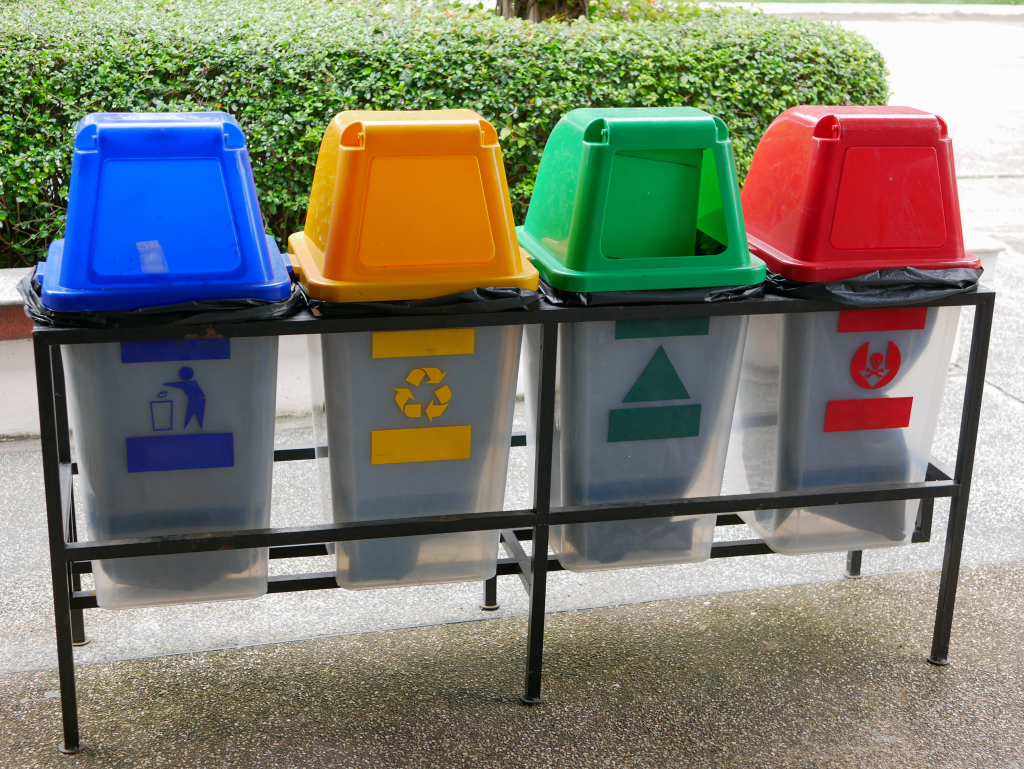
In practical terms, this means a typical compliant set-up for a business would be: 1) a bin for paper & card; 2) a bin for mixed recyclables (plastic/metal/glass); 3) a bin for food waste (or food+garden if applicable); and 4) a bin for general residual waste. Many organizations already have similar recycling systems – the key change is that it’s now mandated by law.
These co-collection allowances simplify implementation (reducing the “bin burden” to a manageable level but do not remove the obligation to separately collect the core categories. In other words, you cannot simply throw everything into one trash dumpster – at minimum you need separate streams as outlined. Discuss the collection scheme with your waste contractor to ensure you have the right containers and service in place for each required stream. Your waste management provider will advise how they handle paper versus mixed recyclables and provide the appropriate bins or pickups to keep you compliant.
Practical Compliance Requirements for Businesses
For ISO-certified businesses, compliance will involve a combination of operational changes, employee training, and coordination with waste contractors. Here are the practical steps and requirements to achieve compliance with the Separation of Waste Regulations:
-
Set Up Separate Bins and Containers: Examine your waste generation points (offices, kitchens, workshops, etc.) and provide clearly marked bins for each required waste stream. At a minimum, ensure there are separate receptacles for paper/cardboard, mixed recyclables (plastic/metal/glass), food waste, and general waste, plus a garden waste bin if needed. Color-coded or clearly labeled bins should be placed in convenient locations (e.g. recycling bins in offices for paper, food waste bins in kitchens and break areas). This source separation should happen right where waste is thrown away, to make it easy for staff to comply.
-
Clear Labeling and Signage: All bins should have labels indicating what can and cannot go in each. Use simple signage (with images if helpful) to show, for example, the recycling symbol and list of acceptable materials for the mixed recycling bin, a “paper only” label for the paper bin, and so on. The goal is to prevent confusion and avoid contamination (such as food ending up in the paper bin). Many organisations post recycling posters in kitchens or near bin stations as a reminder.
-
No Mixing of Streams: Absolutely no mixing of designated waste streams is allowed in the same container (aside from the permitted co-mingling of plastic/metal/glass or food/garden as discussed). This means, for instance, general waste must not contain recyclables that could have been separated, and recycling bins should not contain food or non-recyclable trash. Ensure any liners or bags you use are also designated properly (e.g. use clear bags for recyclables if required by your collector, and perhaps green bins/bags for food waste). Regularly remind staff that “general waste is only for items that cannot be recycled or composted” to maximize separation.
-
Staff Training and Awareness: A successful waste separation program hinges on employee participation. Provide training to all employees (and contractors on-site) about the new waste segregation system. This can include short toolbox talks or presentations explaining why the company is implementing these changes (legal compliance and environmental benefits), and how to correctly sort waste. Emphasize practical details, like emptying food from packaging before recycling the packaging, rinsing containers if needed to avoid contamination, and what to do if unsure about an item. Use posters, intranet announcements, and regular reminders to reinforce correct sorting habits. For ISO 14001 organisations, this training aligns with the competence and awareness requirements – ensure you record attendance or materials of training sessions as part of your compliance evidence.
-
Adapt Internal Processes: Update your company’s waste management procedures and policies to reflect the new separation requirements. For example, if you have an Environmental Procedures Manual or waste handling work instructions, revise them to specify the segmented waste streams and the handling/storage practices for each. If your operations involve cleaning staff or facilities management teams handling waste, communicate the new procedures to them clearly. You may need to adjust janitorial routines (so that cleaners don’t inadvertently recombine separated waste into one bag). In cafeterias or kitchens, establish routines for collecting food waste separately (perhaps with compostable liners and sealed bins to manage odors until collection). All of these operational controls should be documented and integrated into your environmental management system.
-
Coordinate with Waste Carriers: Engage your waste collection contractor early to arrange appropriate service for each waste stream. You might need to modify your contract or service level so that, for example, you get a weekly food waste pickup, a recycling pickup, and a general waste pickup separately. Discuss container options (e.g., a dedicated wheelie bin for food waste – often smaller and secured against vermin, larger bins for recyclables, etc.). Ensure your waste carrier will indeed collect and keep the streams separate (legally, they are also obliged not to remingle them once separated. Also clarify with them how paper/card will be collected – many waste companies will provide a separate bin for paper/cardboard or a compartmentalized recycling bin. If your provider plans to collect paper mixed with other recyclables, confirm that this is an acceptable method under the new rules (as the guidance says this is only if the waste collector has that arrangement). Keep any documentation or emails from your waste contractor about how they handle your recyclables, as this can demonstrate you’ve taken reasonable steps to comply.
-
Maintain Waste Collection Schedules: Once the separate collections are in place, adhere to the schedules provided by your waste collector or local authority. For example, food waste is expected to be collected weekly under the new system (to avoid hygiene issues), so ensure your internal processes accommodate that frequency (e.g., don’t let food waste sit uncollected for weeks). Likewise, if you have a schedule for recyclables and residual waste pick-ups, make sure the bins are put out or accessible on those days. Compliance includes not overflowing bins or resorting to mixing streams because one bin is full – so if you find one waste stream regularly exceeds capacity, arrange for a larger container or more frequent collection.
-
Quality Control – Avoid Contamination: Ensure the quality of separated waste streams by preventing contamination. In practice, this means checking that recyclables placed in the bins are relatively clean (e.g. empty bottles/cans, no half-full food containers in the recycling). Remove any obvious contaminants (like plastic packaging tossed in the paper bin or food in the recycling bin) when noticed. You may implement spot-checks: for instance, your facility team could periodically inspect the contents of recycling bins. High levels of contamination might lead your waste contractor to treat a batch as general waste, defeating the purpose; it could also be seen as non-compliance if you consistently allow mixed content. Train employees on what not to do (like no throwing coffee cups with liquid into paper recycling, etc.), and consider providing rinsing stations or scraping tools in pantries to help keep recyclables clean. By maintaining good separation quality, you not only comply with the letter of the law but also with its spirit – improving recycling outcomes.
-
Record-Keeping: Although not explicitly a new requirement of the 2024 regulations, good record-keeping is a smart compliance practice. Continue to maintain waste transfer notes or consignment notes for all waste collections as required by existing laws, and ensure they reflect the different waste streams. It may be useful to track quantities of each waste type leaving your site (many waste contractors can provide reports of weights of recyclables vs general waste). For ISO 14001, these records will feed into evaluating your environmental performance (e.g. increasing recycling rate, reducing landfill waste) and demonstrating compliance. Additionally, keep records of any training conducted (dates, attendees), updates to procedures, and communications with your waste contractor regarding waste separation. Having this documentation readily available will help in both external inspections (by the EA) and ISO audits.
By implementing the above measures, businesses will meet the practical compliance requirements of the Separation of Waste Regulations. In summary, provide the right bins, train your people, work with your waste hauler, and monitor the process. The changes may entail some upfront effort – purchasing bins, reconfiguring waste rooms, educating staff – and potentially some modest costs (for extra collections or bins). However, there can be long-term benefits: many organisations find that better recycling can slightly reduce general waste disposal costs (landfill/incineration is expensive) and it visibly demonstrates your company’s commitment to sustainability.
Implications for ISO 14001 Environmental Management Systems
If your organisation is certified to ISO 14001, the new waste separation regulations should be viewed through the lens of your Environmental Management System (EMS). ISO 14001 requires organisations to identify and have a plan for compliance with environmental legal requirements – and this is exactly such a requirement. Key implications include:
-
Legal Compliance Obligations: ISO 14001’s Clause 6.1.3 mandates that companies determine and fulfill their compliance obligations (laws and regulations) related to the environment. The Separation of Waste (England) Regulations 2024 establish a binding legal obligation for waste management. ISO-aligned organisations should immediately update their legal register or compliance obligation register to include this regulation. Detail which parts of the law apply (e.g. the duty to segregate recyclables at your premises) and the date by which you must comply (March 2025 for most, or 2027 for micro-businesses). Going forward, you’ll need to evaluate compliance with this regulation on an ongoing basis (e.g. via periodic internal audits or checks) as part of ISO 14001 requirements. Failing to comply not only risks legal enforcement but would also likely be flagged as a non-conformance in an ISO 14001 audit if the issue is significant.
-
Environmental Aspect & Planning: In your EMS planning, waste management is typically identified as an environmental aspect. With the new law, the significance of this aspect may be re-evaluated. The need to divert waste from landfill and improve recycling aligns with environmental objectives. Organisations may incorporate the regulation’s requirements into their environmental objectives and targets – for instance, an objective to increase the recycling rate or achieve 100% compliance with waste segregation rules. This ensures that top management and all relevant departments are aware and supportive of the initiative (ISO 14001 puts emphasis on leadership commitment and integration of the EMS into operations).
-
Operational Controls: The EMS must include operational controls to manage significant environmental aspects and compliance obligations (Clause 8.1). The waste segregation measures described in the prior section (bins, procedures, etc.) are essentially operational controls implemented to ensure compliance and improve environmental performance. ISO 14001 organisations should formalise these controls – for example, by updating or creating work instructions for waste segregation, incorporating checks into routine inspections (perhaps as part of 5S or safety walks, also covering environmental points), and controlling relevant documented information (like maintaining the signage, keeping procedures version-controlled, etc.). You might also integrate waste separation compliance into contractor management if you use cleaning or facilities contractors (ensuring their contracts/MOUs include following your waste sorting rules on-site).
-
Training and Awareness: ISO 14001 Clause 7.3 requires that employees working under the organisation’s control be aware of their environmental responsibilities, including compliance obligations. The introduction of these regulations provides a tangible topic for awareness training. Ensure that your onboarding for new employees now covers waste separation practices, and that all existing staff have been informed of the new legal duty. You may leverage ISO 14001’s requirements to document competence – for example, keep a record that staff have read the new waste procedure or attended a briefing (this can be shown to ISO auditors or inspectors as evidence that you have communicated the legal requirements internally). Additionally, fostering awareness of why the company is doing this (legal compliance and environmental benefit) can improve employee buy-in, which is crucial for successful implementation.
-
Communication and Leadership: Under ISO 14001, internal and external communication regarding environmental matters should be managed (Clause 7.4). Consider communicating your organisation’s compliance with the waste separation law as a positive message – for example, in sustainability reports or staff newsletters (“We have introduced a new recycling system in line with UK regulations to reduce our environmental footprint”). This demonstrates leadership and commitment (Clause 5) to both legal compliance and environmental improvement, which are core principles of ISO 14001. If you have an ISO 9001 (Quality) or ISO 45001 (Safety) integrated system, this change might also be discussed in integrated management meetings to ensure all aspects of operations align with the new process (quality managers may, for instance, need to ensure that any waste handling changes do not adversely affect production flow or product safety – though generally, they should not, but it’s good to have cross-functional awareness).
-
Monitoring, Evaluation, and Improvement: With new processes in place, ISO 14001 organisations will need to monitor and evaluate their effectiveness (Clauses 9.1 and 9.2). This could include tracking metrics such as the amount of each waste type collected (to see if recycling volumes go up), checking contamination rates or incidents of non-compliance (e.g. if a load was rejected for mixing – treat that as an incident to investigate), and including the waste separation check in your internal audit program. For instance, your next internal environmental audit should verify that the required bins are in place, labeled, and being used correctly, and that staff are aware of the procedures. Any non-conformities (like evidence of recyclables in the general waste dumpster) should trigger corrective action under ISO 14001’s continual improvement process (Clause 10). Management reviews (Clause 9.3) should also cover compliance status – the new waste regs compliance can be a line item to report on to top management, ensuring they are apprised of how the organisation is meeting its new legal duties.
In summary, ISO 14001-certified organisations are expected not only to comply with the Separation of Waste Regulations, but to do so in a systematic, well-documented manner. The good news is that your EMS provides a framework to manage this change effectively: by updating your legal compliance procedures, operational controls, and training programs, you will integrate the new requirements seamlessly and maintain both your certification and your legal compliance.
Actionable Recommendations and Next Steps
For Environmental and Quality Managers (and anyone in charge of compliance or sustainability), here are actionable steps to ensure your organisation is prepared and aligned with the new waste separation rules:
-
Update Your Legal Register: Add the Separation of Waste (England) Regulations 2024 to your ISO 14001 compliance register (or legal requirements list) along with key details. Note the dates (in force June 2024; compliance required by March 2025 for most businesses) and outline what the law requires you to do. This will flag the regulation in your management system so it doesn’t get overlooked.
-
Conduct a Gap Analysis: Assess your current waste management practices against the new requirements. Identify gaps – e.g., do you already recycle all these streams? Do you have separate food waste collection? Are paper and cardboard separated from other recyclables? This analysis will tell you which new bins or processes you need to introduce. Also determine if you fall under any exemptions or later deadlines (are you a micro-business under 10 employees with until 2027? If so, you could delay some action, but it may still be wise to start now).
-
Engage Stakeholders and Secure Resources: Brief senior management about the new legal obligation and the need for compliance (especially if budget approval is required for bins or service changes). ISO 14001 emphasizes leadership commitment – use this to gain support for necessary resources. Also, involve facilities management, procurement (for arranging bins/service contracts), and any green team or sustainability committee in planning the roll-out.
-
Coordinate with Your Waste Contractor: Contact your waste disposal contractor as soon as possible to discuss service adjustments. Ensure they can provide separate collection for recyclables and food waste by the required date. Discuss container options: e.g., will they give you a separate paper/card bin and a mixed recycling bin, or do they prefer all dry recyclables mixed? Confirm the collection frequency for food waste (likely weekly) and any changes in schedules for other waste streams. If you don’t currently have a food waste collection service, arrange one (local councils or private waste companies can offer this). Get written confirmation of the agreed plan – this not only helps planning but also serves as evidence of due diligence.
-
Implement Infrastructure Changes: Purchase or allocate containers for each waste stream as needed. This might involve: indoor bins (for offices, kitchens, etc.) for initial collection by staff, larger wheelie bins or skips outside for each stream (for pickup by the waste carrier), and possibly caddies or smaller bins for desks (if you collect paper separately at desks, for instance). Don’t forget weather-proofing and pest-proofing for outdoor bins (especially food waste). Clearly label all containers according to their stream (color coding can be very effective – many organisations use e.g. green for recycling, brown or green for organics, black for general waste, blue for paper, etc., but choose a scheme that suits you and possibly aligns with local norms). Post signage around the workplace to guide proper sorting.
-
Train and Engage Employees: Roll out an internal communication plan to educate all employees about the new waste separation system. Explain the what, why, and how: what streams to separate and where to put each; why it’s important (legal compliance, environmental benefits); and how to do it right (e.g., rinse food containers, keep paper clean, etc.). Use multiple channels: emails, posters near bins, a demonstration at a team meeting, or even short videos. Encourage a culture of recycling – perhaps designate “environmental champions” or green team members to help monitor and remind colleagues initially. Ensure this training is documented (even a simple email to all staff outlining the rules is useful evidence). For any employees who handle waste collection internally (janitors, etc.), provide focused instruction so they don’t undo the separation. Remind everyone that starting 1 April 2025, this is not just company policy but a legal requirement – so full participation is expected.
-
Monitor and Correct: Once implemented, monitor the effectiveness of the waste separation. In the early weeks, you might do daily spot-checks on bins to catch any issues. If you find contamination (wrong items in bins), use it as a coaching opportunity – send a gentle reminder or add clearer signage in that area. Track volumes if possible; seeing a high volume of recyclables being diverted can be motivating and can be reported as a success. Also, watch your general waste – if recyclables are still ending up in there, identify why (do you need more recycling bins or closer proximity? More training? Different shift arrangements?). Incorporate these checks into your internal audits or inspections for ISO 14001. If problems persist, perform a root cause analysis (maybe the bins are wrongly located, or a certain team isn’t aware) and take corrective action. Continuous improvement will help maintain compliance and even go beyond it (perhaps you discover additional streams you can recycle, like batteries or electronics, and decide to tackle those too).
-
Document and Maintain Records: Keep all documentation up to date: revise your Environmental Manual or procedures to reflect the new process, and ensure old versions (e.g., that might have said “general waste and mixed recycling” only) are replaced. Maintain training records (sign-in sheets, emails sent), waste contractor agreements, and any compliance checklists. These will be invaluable if an external auditor or inspector asks for proof that you have a system in place. Additionally, maintain the waste transfer notes for each stream – these legally required documents will show that you are sending, say, food waste for composting, recyclables for recycling, etc., as required. Over time, use these records to evaluate performance (e.g., reduction in residual waste quantities, which is a positive outcome).
-
Leverage the Change for ISO Objectives: Consider setting an ISO 14001 environmental objective related to this initiative. For example, “Achieve a 50% reduction in general waste by end of 2025 (by diverting recyclables and food waste)” or “Recycle 100% of paper, plastic, metal, glass, and food waste generated on-site in compliance with the regulations”. This can galvanize efforts and demonstrate that your EMS is driving improvement. Track progress on this objective in management reviews. You might also integrate this with quality or corporate social responsibility goals (e.g., improving waste management can contribute to efficiency and community expectations).
-
Stay Informed and Updated: Environmental legislation can evolve. Keep an eye on further guidance from DEFRA or the Environment Agency. The government’s policy update in late 2024 clarified co-collection and micro firm timelines – ensure you stay updated on any future amendments. For instance, guidance for specific sectors or any grace periods/exemptions could be issued. Subscribe to industry newsletters or gov.uk updates on waste and recycling to catch any new developments. Also, as 2027 approaches, be aware of the plastic film collection requirement – if your business generates a lot of stretch wrap or plastic film, plan for how you will collect and store this for recycling when the time comesgov.uk. By staying proactive, you’ll always be ahead of the compliance curve, which is exactly where an ISO 14001 organisation should be.
Next Steps: Immediately after reading this, take a walk through your facility with fresh eyes: look at every area where waste is thrown out and envision the new separation system there. Begin drafting an action plan with deadlines (e.g., “Week 1: contact waste hauler; Week 2: order bins; Week 4: deliver staff training; By Mar 2025: full compliance achieved”). By breaking the task into manageable steps, you can ensure your organisation meets the Separation of Waste (England) Regulations 2024 on time. Not only will this keep you compliant with the law (and avoid any regulatory penalties), but it will also reinforce your ISO 14001 credentials and demonstrate environmental leadership in practice.
Conclusion
The Separation of Waste (England) Regulations 2024 usher in a new era of standardized recycling and waste management across businesses and local authorities in England. For ISO-certified organisations, especially those under ISO 14001, this is a prime example of a changing compliance obligation that must be seamlessly incorporated into your Environmental Management System. By understanding the requirements – from what waste streams need separating to when and how – and by taking proactive steps as outlined above, environmental and quality managers can ensure their organisations not only obey the law but also contribute to broader sustainability goals. This regulatory change is an opportunity to improve waste practices, engage employees in environmental stewardship, and underscore your company’s commitment to compliance and continual improvement. By acting now to implement the required waste separation and by embedding it into your ISO 14001 processes, you will keep your organisation ahead of the curve and help drive the UK towards a more circular, less wasteful econom