Skip to main content
Skip to footer
Skip to main content
Skip to footer

The Hidden Cost of “We’ll Deal With Safety Later”
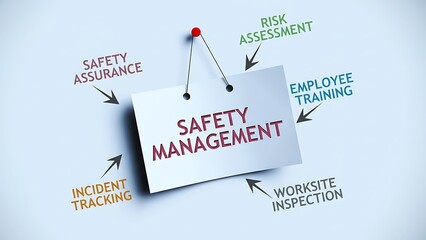
The Hidden Cost of “We’ll Deal With Safety Later”
It starts small.
A missed check.
A loose cable.
A tired employee who says nothing.
No one plans for an accident. But many businesses quietly accept the risk.
And that is the problem.
Too many organisations treat occupational health and safety as a box to tick later. When there is more time. When things calm down. When budgets allow.
But “later” has a cost.
People get hurt.
Work stops.
Trust breaks.
And once that happens, fixing it is far harder than preventing it.
This is where ISO 45001 changes everything.
Why Safety Still Feels Like a Struggle
Let’s be direct.
Most businesses already care about safety. That is not the issue.
The real pain points sit deeper:
- You rely on people remembering what to do
- Processes exist, but no one follows them fully
- Risk is discussed, but not controlled
- Leaders assume “it won’t happen here”
- Safety feels reactive, not planned
And here is the truth.
If your system depends on memory, luck, or “common sense”… it will fail.
Because people are human.
They rush.
They forget.
They take shortcuts.
Not because they do not care, but because the system allows it.
ISO 45001: What It Really Means for Your Business
ISO 45001 is not paperwork.
It is not a manual sitting on a shelf.
It is a way of running your business so that risk is controlled before harm happens.
At its core, ISO 45001 helps you:
- Spot danger early
- Put simple controls in place
- Make safety part of daily work
- Give people clear responsibility
- Build habits that reduce risk
It turns safety from a reaction… into a system.
And that shift is where real change begins.
The Real Role of Risk in Occupational Health and Safety
Let’s talk about risk.
Most businesses think risk means “big accidents.”
But that is only the surface.
Risk is:
- A wet floor no one reported
- A machine used slightly wrong
- A process that skips one small step
- A worker too tired to focus
These are not rare events.
They happen every day.
ISO 45001 forces you to ask a simple question:
“What could go wrong here?”
Then it pushes further:
“What are we doing about it?”
Not once.
Not yearly.
But all the time.
This is where many organisations struggle.
Because identifying risk is easy.
Controlling it consistently is not.
Why Most Safety Systems Break Down
Here is something many leaders do not want to admit.
The system is not the problem.
The way it is used is.
Common issues include:
1. Too Complicated
If people cannot understand it, they will ignore it.
2. Too Much Paper
If it slows work down, people will work around it.
3. No Ownership
If no one is clearly responsible, nothing gets done.
4. No Follow-Up
If no one checks, rules fade away.
ISO 45001 addresses all of this—but only if it is applied properly.
It is not about adding more.
It is about making what you already do… work better.
What Good Looks Like in Practice
Imagine this instead.
A workplace where:
- Staff know exactly what safe work looks like
- Risks are spotted before they grow
- Leaders ask about safety as often as performance
- Issues are raised without fear
- Small problems are fixed fast
This is not a theory.
This is what happens when ISO 45001 is built into the way you operate.
Not added on top.
The Leadership Shift That Changes Everything
One of the biggest changes ISO 45001 brings is this:
Safety becomes a leadership responsibility.
Not just the safety officer.
Not just the site manager.
Everyone at the top must:
- Set clear expectations
- Provide resources
- Lead by example
- Act on concerns
Because culture starts at the top.
If leaders ignore risk, so will everyone else.
But when leaders take it seriously, something powerful happens.
People follow.
The Cost of Ignoring Occupational Health and Safety
Let’s be clear.
Ignoring safety does not save time or money.
It delays the cost.
And when it comes, it is bigger.
Think about:
- Lost working days
- Staff leaving after incidents
- Legal action
- Damaged reputation
- Stress across teams
These are not rare outcomes.
They are common in businesses without a strong system.
ISO 45001 is not about avoiding paperwork.
It is about avoiding these outcomes.
Making ISO 45001 Work Without Overload
A common fear is this:
“Will this slow us down?”
It should not.
If done right, ISO 45001 should:
- Simplify how work is done
- Remove confusion
- Reduce mistakes
- Save time in the long run
The key is to keep it simple.
Focus on:
- Clear steps
- Simple checks
- Easy reporting
- Regular review
Not complex language.
Not long documents.
Just what works.
Turning Risk Into Control
Let’s break this down into something practical.
Every task in your business has risk.
ISO 45001 helps you apply a simple cycle:
- Identify the risk
What could cause harm? - Assess the risk
How likely is it? How serious? - Control the risk
What can stop it or reduce it? - Review the risk
Is the control working?
This cycle should live inside daily work.
Not just audits.
Not just meetings.
Every day.
Why Employees Are Your Strongest Asset
You cannot manage safety alone.
Your people are your biggest advantage.
They:
- See risks first
- Know where shortcuts happen
- Understand real working conditions
But only if they speak up.
And that only happens when:
- They feel safe to report
- They know it matters
- They see action taken
ISO 45001 builds this trust.
It creates a system where people are part of the solution—not just told what to do.
The Difference Between Compliance and Control
Many organisations aim for compliance.
That means:
- Passing audits
- Meeting minimum rules
- Having documents in place
But compliance is not control.
Control means:
- Risks are actively managed
- Problems are fixed early
- Systems are followed daily
- Safety is part of decisions
ISO 45001 pushes you beyond compliance.
It moves you toward control.
What Happens When You Get It Right
When ISO 45001 is embedded properly, the results are clear:
- Fewer incidents
- More confident staff
- Better productivity
- Stronger reputation
- Clear direction for leaders
Safety stops being a burden.
It becomes a strength.
A Simple Reality Check
Ask yourself:
- Do we rely on people remembering what to do?
- Do we fix problems only after something happens?
- Do we truly understand our risks?
- Do leaders actively drive safety?
If the answer to any of these is “no”…
There is a gap.
And that gap carries risk.
Final Thought: Safety Is Not an Add-On
ISO 45001 is not something extra.
It is not separate from operations.
It is how operations should run.
Because at the end of the day:
Work should not harm people.
And that is not a goal.
It is a responsibility.
CTA: Start With One Simple Step
You do not need to change everything at once.
Start small.
Today, pick one task in your business and ask:
“What could go wrong here?”
Then ask:
“What are we doing about it?”
Write it down.
Fix one thing.
Review it tomorrow.
That is how ISO 45001 begins.
Not with a certificate.
But with control.