Skip to main content
Skip to footer
Skip to main content
Skip to footer

The Small Cyber Security Habits That Protect Your Business Every Day
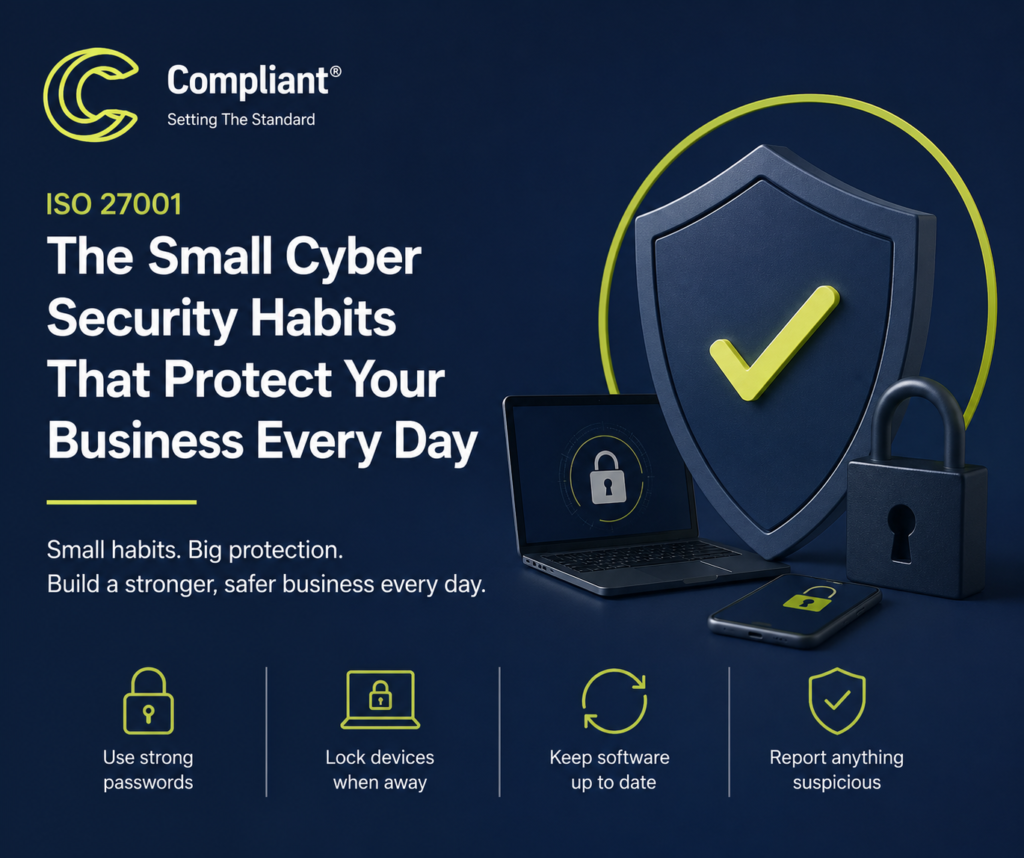
The Small Cyber Security Habits That Protect Your Business Every Day
Small Habits. Big Protection.
Most businesses believe cyber attacks only happen to large organisations.
They assume criminals are only interested in companies with millions of pounds in revenue or thousands of employees.
That is simply not true.
Cyber criminals look for easy opportunities. They look for weak passwords. They look for staff who click on suspicious emails. They look for systems that have not been updated. They look for businesses that believe, “It won’t happen to us.”
One small mistake can lead to lost customer information, damaged trust, financial loss, and days or even weeks of disruption.
The worrying part is that many cyber incidents begin with something incredibly simple.
One employee opens the wrong email.
Someone reuses the same password.
A laptop is left unlocked.
Sensitive information is shared with the wrong person.
These habits seem harmless until they become expensive.
The good news is this.
Protecting your business does not always require huge investments or complex technology. Many of the strongest security measures are built through small actions repeated every day.
That is exactly what ISO 27001 encourages.
Rather than relying on luck, ISO 27001 helps businesses build good security habits that become part of everyday work.
In this guide, you’ll discover the small cyber security habits that make the biggest difference, why they matter, and how the support of an experienced ISO consultant can make implementing ISO 27001 much simpler.
Why Small Habits Matter More Than Big Reactions
Many organisations only improve cyber security after something goes wrong.
Unfortunately, by then the damage has already been done.
Recovering from a cyber attack can involve:
- Lost business
- Lost customer confidence
- Legal responsibilities
- Operational downtime
- Financial costs
- Damage to reputation
Prevention is always easier than recovery.
That is why successful businesses build security into everyday routines.
Think of cyber security like locking your office door.
You would never leave it open overnight simply because nothing has ever been stolen before.
The same thinking applies to your digital information.
Small daily habits reduce opportunities for attackers.
Over time, those habits become part of your company culture.
That is one of the biggest strengths of ISO 27001.
It helps organisations move from reacting to problems to preventing them.
What Is ISO 27001?
ISO 27001 is the international standard for information security management.
It provides a structured way to protect important information.
This includes:
- Customer records
- Employee information
- Financial data
- Contracts
- Intellectual property
- Supplier information
- Business systems
Rather than focusing on technology alone, ISO 27001 looks at people, processes, and systems together.
It asks simple but important questions.
What information do you hold?
Who needs access?
What could go wrong?
How would you respond?
How do you stop problems before they happen?
Answering these questions creates a stronger, more secure organisation.
Habit One: Think Before Clicking
Email remains one of the biggest ways cyber criminals reach businesses.
Many attacks begin with a message that appears genuine.
It may look like it comes from:
- Your bank
- A customer
- A supplier
- A delivery company
- A colleague
One click can install harmful software or give criminals access to your systems.
Creating a habit of slowing down for a few seconds can prevent major problems.
Ask yourself:
- Was I expecting this email?
- Does the sender look correct?
- Is the message trying to rush me?
- Does the link look genuine?
Those few extra seconds can stop a serious incident before it starts.
ISO 27001 encourages regular staff awareness training so employees recognise these risks.
Habit Two: Use Strong Passwords
Passwords remain one of the simplest ways to protect business information.
Unfortunately, many businesses still use passwords that are easy to guess.
Examples include:
- Company123
- Password1
- Welcome123
Even worse, people often use the same password across several systems.
If one account becomes compromised, many others can quickly follow.
Good password habits include:
- Using long passwords
- Avoiding personal information
- Creating unique passwords
- Using password managers where appropriate
- Enabling multi-factor authentication
ISO 27001 encourages organisations to control access properly so only authorised people reach sensitive information.
Habit Three: Lock Your Devices
Leaving a computer unlocked may seem harmless.
In reality, it gives anyone nearby immediate access to confidential information.
Whether working in an office, at home, or while travelling, locking devices whenever you step away should become automatic.
It takes only seconds.
Yet it protects customer data, financial records, and internal documents.
Small habits like this create stronger security without slowing people down.
Habit Four: Keep Software Updated
Software updates often appear at inconvenient times.
Many people delay them.
Unfortunately, cyber criminals actively search for systems running old software.
Updates often repair known security weaknesses.
Ignoring them leaves doors open.
ISO 27001 promotes regular maintenance to reduce these risks before attackers find them.
Keeping systems current is one of the easiest security improvements any business can make.
Habit Five: Share Information Carefully
Not everyone needs access to every document.
Giving staff unrestricted access increases risk.
Instead, information should only be available to people who genuinely need it.
This reduces the chance of accidental mistakes and limits damage if an account is compromised.
ISO 27001 follows this principle throughout its approach to information security.
Habit Six: Report Problems Early
Employees sometimes worry about reporting mistakes.
They fear getting into trouble.
That fear often makes problems worse.
If someone clicks a suspicious link, reporting it immediately allows the IT team to respond quickly.
Waiting several hours can give attackers valuable time.
A strong security culture encourages openness rather than blame.
ISO 27001 supports learning from incidents instead of hiding them.
Habit Seven: Back Up Important Information
Even with excellent security, unexpected events can happen.
Hardware can fail.
Files can become corrupted.
Cyber attacks can affect important systems.
Regular backups allow businesses to recover much faster.
Just as importantly, backups should be tested.
A backup that cannot be restored offers little protection.
ISO 27001 encourages businesses to prepare for disruption before it occurs.
Habit Eight: Review Access Regularly
Businesses constantly change.
People join.
People leave.
Roles evolve.
Without regular reviews, employees may keep access they no longer need.
Former employees could even retain access if accounts are forgotten.
Regular reviews help ensure access stays appropriate.
This reduces unnecessary risk while keeping systems organised.
Habit Nine: Make Security Part of Everyday Conversations
Cyber security should not only appear during annual training sessions.
It should become part of normal business conversations.
Managers can discuss recent scams.
Teams can share lessons learned.
New starters can receive clear guidance from day one.
When security becomes part of company culture, good habits become automatic.
That cultural change is one of the greatest benefits of ISO 27001.
Habit Ten: Keep Improving
Cyber threats continue to change.
Businesses change too.
The habits that protect your organisation today should continue developing tomorrow.
ISO 27001 is built around continual improvement.
Rather than creating a policy that sits untouched, businesses regularly review:
- Risks
- Controls
- Staff awareness
- Technology
- Procedures
- Lessons learned
This ongoing approach helps organisations remain resilient as new challenges emerge.
How an ISO Consultant Makes ISO 27001 Easier
Many organisations delay ISO 27001 because they believe it will be complicated.
That concern is understandable.
The standard covers many different areas, and knowing where to begin can feel overwhelming.
This is where the benefits of an ISO consultant’s support become clear.
An experienced consultant brings structure, clarity, and practical advice based on real-world experience. Instead of trying to interpret every requirement alone, your business has someone to guide you through each stage of the journey.
An ISO consultant can help you:
- Understand what ISO 27001 requires.
- Identify any gaps in your current processes.
- Carry out a risk assessment that reflects your business.
- Develop clear and practical policies.
- Support staff training and awareness.
- Prepare for internal audits.
- Build confidence before your certification audit.
- Create a management system that is practical to maintain.
Perhaps most importantly, a consultant helps you avoid unnecessary work.
Many businesses try to create large amounts of paperwork because they believe that is what certification requires. In reality, ISO 27001 is about having effective controls that work for your organisation.
A good consultant keeps the process focused, practical, and proportionate to your business.
Building a Strong Security Culture
Technology alone cannot protect your business.
Firewalls.
Antivirus software.
Secure servers.
They all matter.
But people remain your strongest defence.
When employees understand why cyber security matters, they make better decisions every day.
That creates a workplace where security becomes second nature rather than an afterthought.
ISO 27001 helps build that culture.
It encourages leaders to set expectations, involve staff, review performance, and continually improve.
Over time, these daily habits become part of how your organisation operates.
The Long-Term Benefits of ISO 27001
Organisations that implement ISO 27001 often discover benefits beyond improved cyber security.
These include:
- Greater customer confidence.
- Stronger protection of sensitive information.
- Better management of business risks.
- Improved staff awareness.
- More consistent processes.
- Increased confidence when bidding for contracts.
- Stronger relationships with suppliers and partners.
- Better preparedness for future cyber threats.
These advantages continue long after certification has been achieved.
Final Thoughts
Cyber security is rarely about one big decision.
It is built through hundreds of small choices made every single day.
Every strong password.
Every software update.
Every careful click.
Every reported concern.
These simple habits reduce risk and strengthen your organisation over time.
ISO 27001 provides the framework that turns these individual actions into a structured, consistent approach to protecting your business.
You do not have to tackle the journey alone. With the support of an experienced ISO consultant, implementing ISO 27001 becomes clearer, more manageable, and far more effective.
The result is not simply certification.
It is a business that is better prepared, more resilient, and trusted by customers, employees, and partners alike.
Continue Learning
Every organisation can improve its cyber security, regardless of its size or industry.
Take time to review your current habits, identify where small improvements can make the biggest impact, and learn how ISO 27001 can help build a stronger foundation for the future. The first step towards better security is often much smaller than you think.