ISO 45001: Looking After Your People Is One of the Smartest Business Decisions You Can Make
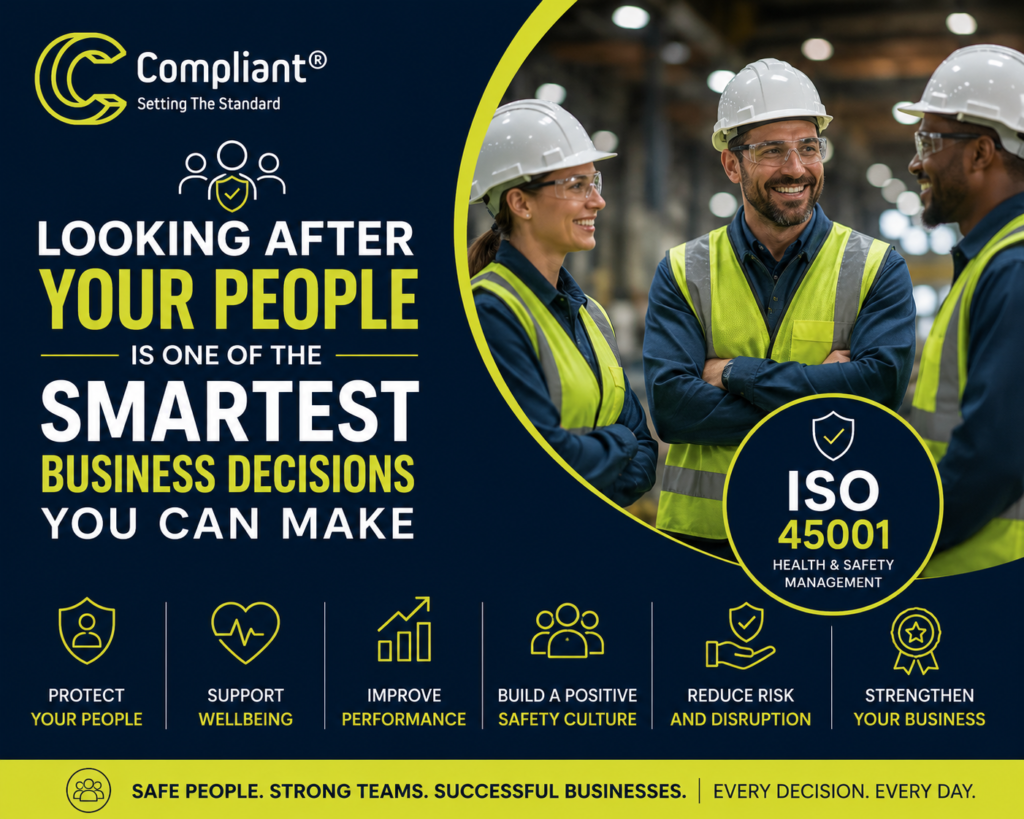

ISO 45001: Looking After Your People Is One of the Smartest Business Decisions You Can Make
Every business depends on people.
Without them, nothing moves.
Orders are not fulfilled.
Customers are not supported.
Problems are not solved.
Yet many organisations spend more time protecting equipment than they do protecting the people who use it.
That may sound surprising.
But it happens every day.
Health and safety is sometimes treated as something that only matters when an inspection is due or after an accident has happened.
By then, it is often too late.
The strongest organisations think differently.
They understand that looking after their people is not simply about following the law.
It is about building a workplace where everyone can do their best work, return home safely, and feel valued every single day.
This is exactly what ISO 45001 was designed to support.
It provides organisations with a clear framework for managing health and safety while creating a culture where people come first.
More importantly, it helps businesses realise something many overlook.
Looking after your people is not a cost.
It is one of the smartest investments you can make.
Your People Are Your Greatest Asset
Businesses often describe employees as their greatest asset.
It is a phrase we hear all the time.
But words alone are not enough.
People quickly notice whether those words are backed up by actions.
Do leaders listen when concerns are raised?
Are risks dealt with before someone gets hurt?
Is wellbeing treated as important?
Do employees feel confident speaking up?
These questions matter because people want more than a pay cheque.
They want to know they work somewhere that genuinely cares.
When employees feel safe, respected and supported, they bring more energy to their work.
They are more engaged.
More productive.
More willing to contribute ideas.
The workplace becomes stronger because people feel valued.
A Safe Workplace Benefits Everyone
Many people think health and safety only protects employees.
In reality, it protects the whole organisation.
A safer workplace often leads to:
- Fewer accidents
- Less disruption
- Better morale
- Lower staff turnover
- Greater productivity
- Improved customer confidence
- Stronger reputation
- Better business performance
Every avoided accident saves more than money.
It protects families.
It protects confidence.
It protects livelihoods.
That is why health and safety should never be viewed as a box to tick.
It should be part of everyday decision making.
Prevention Is Always Better Than Reaction
Think about any major incident.
Very few happen without warning.
Small warning signs often appear first.
Loose flooring.
Damaged equipment.
Poor communication.
Missing training.
Unsafe habits.
The problem is that these warning signs become normal.
People stop noticing them.
Until something happens.
ISO 45001 encourages organisations to identify risks before they become incidents.
That shift from reacting to preventing is one of the biggest strengths of the standard.
Rather than asking,
“What went wrong?”
The organisation asks,
“What could go wrong, and how do we stop it?”
That simple question changes everything.
Safety Builds Trust
Trust is one of the most valuable things an organisation can have.
Employees trust leaders to provide a safe place to work.
Customers trust organisations to operate responsibly.
Suppliers trust businesses to manage risks professionally.
When people see strong health and safety practices, confidence grows.
It shows that the organisation plans ahead rather than waiting for problems to appear.
That confidence reaches far beyond the workplace.
It strengthens relationships with everyone connected to the business.
Good Health and Safety Is Good Leadership
Health and safety is often seen as someone else’s responsibility.
Perhaps the health and safety manager.
Perhaps a supervisor.
In reality, leadership sets the standard.
If leaders take shortcuts, others usually follow.
If leaders value safety, employees notice.
Good leadership means asking questions like:
Are people working safely?
Do they have the right equipment?
Have they received enough training?
Do they feel confident raising concerns?
Leadership is not about having every answer.
It is about creating an environment where people can speak openly and risks are addressed before harm occurs.
Small Risks Become Big Problems
Many workplace accidents begin with something small.
A cable across a walkway.
A missing sign.
Poor lighting.
A rushed decision.
One piece of damaged equipment.
On their own, they may seem unimportant.
Together, they create unnecessary risk.
ISO 45001 encourages organisations to look beyond individual hazards and understand why they exist.
That is where lasting improvements begin.
Listening to Employees Makes Workplaces Safer
Nobody understands a job better than the person doing it every day.
Employees often notice problems long before managers do.
They know where delays happen.
They know which equipment causes frustration.
They know when something feels unsafe.
Creating a workplace where people feel comfortable speaking up is one of the most valuable improvements any organisation can make.
People should never worry about raising concerns.
Instead, they should know their views matter.
Many of the best health and safety improvements begin with a simple conversation.
Wellbeing Matters Too
Health and safety is about much more than avoiding physical injuries.
Modern workplaces also need to think about wellbeing.
Stress.
Fatigue.
Heavy workloads.
Poor communication.
Long working hours.
These issues affect concentration, decision making and performance.
Looking after wellbeing helps people stay healthier, happier and more engaged.
Organisations that recognise this often experience stronger teamwork and better staff retention.
ISO 45001 encourages organisations to consider the full picture rather than focusing only on obvious hazards.
The Hidden Cost of Workplace Incidents
When people think about workplace accidents, they often think about insurance costs.
The real impact goes much further.
There may be:
- Lost productivity
- Delayed projects
- Staff shortages
- Reduced morale
- Customer dissatisfaction
- Damaged reputation
- Time spent investigating incidents
- Higher recruitment costs
Many of these costs are difficult to measure.
But they affect every organisation.
Preventing incidents is almost always less expensive than dealing with the consequences.
Health and Safety Supports Business Growth
Growing businesses face new challenges.
More employees.
New sites.
Different equipment.
Larger customer demands.
Without clear systems, risks increase.
ISO 45001 helps organisations grow with confidence by creating consistent ways of managing health and safety.
Growth becomes more controlled.
Responsibilities become clearer.
Communication improves.
That stability supports long-term success.
Building a Positive Safety Culture
Culture is created by everyday actions.
If employees see unsafe behaviour ignored, they assume it is acceptable.
If improvements happen quickly after concerns are raised, trust grows.
Positive safety cultures share common habits.
People communicate openly.
Managers listen.
Training is ongoing.
Learning never stops.
Everyone understands that safety belongs to the whole organisation.
Not just one department.
Continual Improvement Never Stops
One of the greatest strengths of ISO 45001 is continual improvement.
No workplace is perfect.
New risks appear.
Technology changes.
Businesses grow.
Processes evolve.
Successful organisations continue learning.
They review incidents.
They analyse near misses.
They ask employees for feedback.
They make improvements before problems become serious.
Small changes made regularly create safer workplaces year after year.
Health and Safety Helps Attract Great People
People have choices.
When deciding where to work, salary is important.
So is culture.
Employees increasingly look for organisations that genuinely care about their wellbeing.
A strong commitment to health and safety shows that people matter.
That helps organisations attract talented employees and keep them for longer.
Retention becomes easier because employees feel respected and supported.
ISO 45001 Is About People First
Many people think ISO 45001 is simply a collection of procedures.
It is much more than that.
It is about creating workplaces where people can succeed safely.
It encourages organisations to plan carefully, communicate openly, reduce risks and continually improve.
The paperwork is only there to support better ways of working.
The real focus is people.
Final Thoughts
Every organisation depends on its people.
Looking after them should never be viewed as an obligation.
It is an opportunity.
A safe workplace creates confident employees.
Confident employees provide better service.
Better service builds stronger customer relationships.
Those relationships support long-term success.
That is why ISO 45001 is far more than a health and safety standard.
It is a framework for building stronger organisations through safer people, better leadership and continual improvement.
When businesses invest in their people, everyone benefits.
Employees.
Customers.
Communities.
And the organisation itself.
Continue Learning
Take a fresh look at your workplace this week.
Walk through it with your team and ask one simple question.
“What is one thing we could improve to make work safer?”
The answer may seem small, but small improvements often prevent bigger problems.
That is one of the key principles behind ISO 45001. Continual improvement starts with listening, learning, and acting before risks become incidents.