ISO 9001 Has Changed. Is Your Quality System Ready for the Next Step?
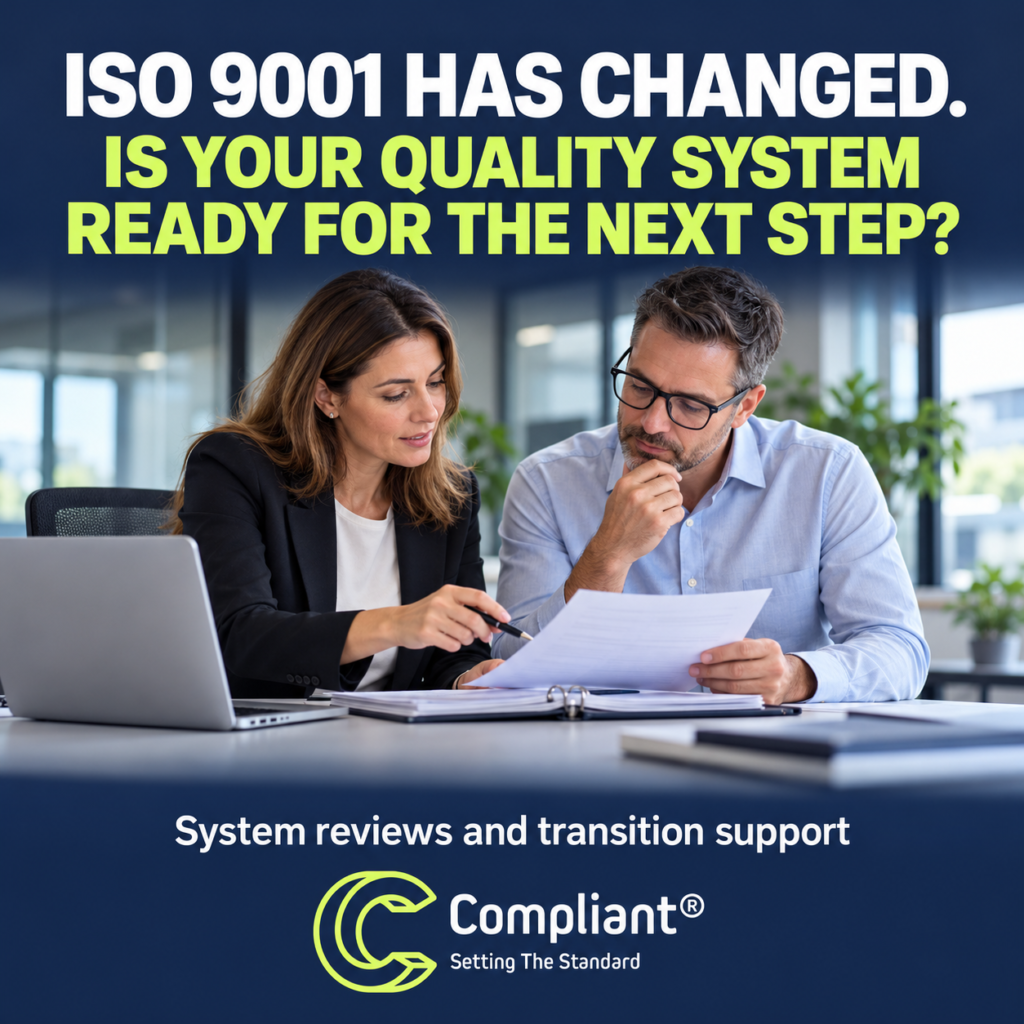
 ISO 9001 Has Changed. Is Your Quality System Ready for the Next Step?
Your customer has chased the same order twice. A member of staff is working from an old form. Someone has fixed a mistake, but nobody knows whether the same mistake will happen again.
Meanwhile, your ISO 9001 certificate is still on the wall.
That gap can cost your business time, money and trust. It also leaves managers dealing with problems that a useful quality system should help them spot and prevent.
Now ISO 9001 has changed. If your first thought is that someone needs to update a few documents before the next audit, it is worth taking a closer look.
A system can look tidy and still leave people unsure about what to do. It can contain clear rules that no longer match how your business works.
For business owners, directors, quality managers and team leaders, this is a chance to ask a useful question:
Does our quality system help us run the business well each day?
An ISO 9001 transition gives you a reason to find out. A good review can show what is working, where support is needed and which changes will make a real difference.
ISO 9001:2026 was published on 16 September 2026. It is the new edition of the standard that sets out requirements for quality management systems. In plain terms, these are the ways your business plans, checks and improves its work so it can meet customer needs.
For organisations with existing accredited ISO 9001:2015 certification, the transition deadline is 30 September 2029. Your certification body, the independent organisation that checks your system and issues your certificate, can explain how the move fits with your audits. Accredited means the body’s work has been independently checked. A transition may take place at a planned routine audit, a renewal audit or a separate transition audit.
The new edition builds on the earlier standard. It keeps the familiar structure, with a stronger focus on leadership, how people support quality, honest behaviour, and the difference between risks and chances to improve. It also carries forward the climate change consideration introduced in 2024.
The transition is your move to the new edition.
Your task is to compare the published requirements with your own system and decide what needs attention.
Some changes may be small. Others may show that a long-standing working habit needs a proper review.
The amount of work depends on your business, your current system and the evidence you already have. A clear review helps you find this out before you spend time changing documents.
Start by looking at the business you run today.
Think about what has changed since your quality system was last given a close look.
You may have taken on more staff, changed suppliers, added a service or moved to new software. Perhaps people now work across more sites. Your customers may ask for checks or records that they did not need before.
Each change can affect how work gets done.
If the system still describes a smaller or older business, staff may have to work around it. They might keep their own notes, create extra forms or rely on a colleague who knows how things really happen.
That can work for a while. Then that colleague goes on leave, a new person joins or a busy week puts the team under strain.
A review should make those weak points visible.
Follow one job from the first customer request to the final delivery. Ask who checks the details, who agrees changes, where records are kept and how the team knows the work meets the agreed needs.
Look for places where people repeat tasks, wait for approval or pass on incomplete details.
Those are useful starting points because they link the quality system to the work that matters to your customers.
Take a simple example.
A customer agrees a change by email. The sales team sees it, but the team doing the work uses the original order. The work is completed as first planned, then has to be done again.
Adding another form may do little to help.
The useful change could be a clear way to update the order, tell the right people and check that they have the current details.
A consultant can help you trace the cause and choose a practical fix. Your team then needs to try that fix and check whether it works.
This makes the review useful beyond the next audit.
Include the handover between teams in your review. A task may be completed well in one department, yet arrive late or with missing details in the next. Ask each team what it needs to receive and what it must pass on. Agree a simple check at the point where the work changes hands.
Look at records too. Could someone who was not involved follow what happened? They should be able to see what the customer asked for, which changes were agreed and how the finished work was checked. If the story depends on one person’s memory, consider what would happen if they were away. Clear records can help a colleague pick up the work without starting again. Use a recent example to test this with your team before deciding whether a new form or a small change to an existing record is needed.
Quality needs clear support from the people who lead the business.
Leaders shape daily choices. If managers praise speed while ignoring skipped checks, staff receive a clear message about what matters.
If people are worried about blame, they may stay quiet when something goes wrong.
Look at how leaders respond when someone raises a concern. Do they listen? Do they provide time to solve it? Are promises to customers checked before they are made?
These questions help bring the stronger leadership focus into everyday work.
A director does not need to know where every form is stored. They do need to understand the problems affecting quality, the help people need and the decisions that could improve results.
For example, repeated late deliveries may need more than a reminder to staff. The business may be accepting work beyond its current capacity.
That needs a management decision.
A review can help turn an ongoing complaint into a clear choice about staffing, workload or delivery promises.
The same approach applies to risks and opportunities.
A risk is something that could stop you delivering as planned. An opportunity is a chance to improve the result.
Consider a supplier that often delivers late. The risk is a missed customer deadline. An opportunity might be to agree better delivery checks or find a suitable second source.
Give each issue an owner and a next step. Then check what happened.
A long list that nobody uses will tell you very little about whether your business is better prepared.
Climate change also needs a sensible look at its relevance to quality.
The requirement to consider whether climate change is relevant to your system came through the 2024 amendment. It is carried into the new edition. The review should also consider relevant customer or other requirements linked to climate change.
For your business, a useful question might be whether severe weather could affect deliveries, access to a site or the supply of materials.
For example, if flooding could block the only route to a work site, consider how that might affect agreed dates and customer updates.
The point is to make a reasoned decision about relevance and act where needed. The climate amendment does not require every business to set up a separate climate programme regardless of its quality needs.
Keep the review linked to what your business does and what could affect the quality of its work.
Once you understand the business and the changes, you can plan your ISO 9001 transition with more confidence.
A practical way to organise the work is to use the following steps. These are planning suggestions; your review still needs to cover all the requirements that apply to your system.
- Confirm the standard and your audit plans.
Use the published ISO 9001:2026 standard as your reference. Ask your certification body when it can assess your business against the new edition, what it expects and how much audit time may be needed.
Agree a realistic target date that allows time to put changes into use and deal with any findings.
If you are seeking your first certificate, confirm which edition your chosen body can currently assess. From 31 March 2028, new and initial accredited certifications may only be issued to ISO 9001:2026.
- Check what you have before changing it.
Compare your current arrangements with the new requirements. Look at records, speak to staff and watch how tasks are carried out.
A document review alone can miss the difference between a written rule and daily practice.
Record where you meet a requirement, where something needs checking and where a change is needed. Include the evidence behind each decision.
This gives you a sound basis for the work ahead.
- Set clear actions and give people time.
For each change, write down what needs doing, who will do it and when it should be finished.
Decide which actions matter most to customer needs and the transition. Give them time in the working week.
If one quality manager is expected to handle every task alongside their normal role, delays are easy to predict. Share the work with the people who own the affected tasks.
- Make the changes easy to use.
Update instructions, forms or systems where the review shows a need. Keep the wording clear and test it with the people who will use it.
If staff cannot find an instruction or understand the next step, the change needs more work.
Check linked tasks too. Changing an order form may affect sales, purchasing, delivery and billing.
Give people a clear way to find the current version.
- Help staff understand what has changed.
Explain changes in terms of their own work. A short session using a real job may be more useful than a long talk about the standard.
Ask staff to show how they would handle a changed order, a missing record or a customer concern.
Their answers can reveal where more help is needed.
Keep suitable records of the support given and check that people can use what they have learned.
- Check the system after the changes.
An internal audit is a planned check of your own system. Use it to test whether the new arrangements are understood, followed and meeting the relevant requirements.
Choose real work to review. Speak to the people involved and follow the records through.
If you find a problem, look at why it happened. Agree action and check whether it solved the cause.
Allow time for this before the external transition audit.
- Review progress with management.
Bring the findings to the people who can make decisions. Discuss what has improved, what remains open and what support is still needed.
Use facts such as missed dates, repeat errors, customer feedback and the results of your checks.
Record clear decisions with owners and dates. Then follow them up.
Management review should help the business move forward. It gives leaders a chance to deal with issues that individual teams cannot solve alone.
The benefits of ISO consultant support are often clearest when time and knowledge are stretched.
You may have a capable team that needs help understanding the revised requirements. You may have inherited a system with records spread across several places.
Or you may know where the problems are but struggle to make progress while keeping the business running.
An ISO consultant can help you turn those concerns into a clear set of tasks.
The value comes from the questions they ask, the care they take when reviewing your work and the way they help your team understand the next steps.
Useful support should leave you able to explain what changed and why.
It should also help you decide what to keep.
A business may already have good ways to handle customer feedback, check completed work and review suppliers. Those arrangements deserve a fair assessment before anyone suggests replacing them.
Building on good work can save time and help staff accept the changes that do matter.
Consultant support can also help uncover the cost of repeat problems.
An error may look small when it is dealt with quickly. Yet it can use time from sales, operations and finance, as well as delay payment or upset a customer.
During a review, try tracking the time spent on a recurring issue for a few weeks. Include extra calls, repeat work, checks and updates.
This can help managers judge which improvements deserve attention first.
You do not need to promise a fixed saving to see the value of understanding where time goes.
Another benefit is having someone question assumptions.
If everyone has used the same process for years, its weak points may feel normal. Staff may stop asking why the same details are entered twice or why an approval takes so long.
A fresh review can bring those questions back into view.
Your team provides the knowledge of the work. The consultant helps test how well the arrangements meet your needs and the standard.
That balance matters. People need to understand and use the system after the review is complete.
The certification decision remains with the independent certification body. Consultant support helps you prepare; it does not replace the assessment of your business.
Compliant can support your ISO 9001 transition through a review of your current quality system and help with planning the work that follows.
That can include identifying gaps, agreeing priorities, supporting document changes, helping staff understand their roles and preparing for internal checks.
The starting point should be your business, your current position and your certification plans.
A clear scope for the support helps everyone understand what will be reviewed, what help is included and which actions remain with your team.
It also helps you plan around normal work, staff leave and your next audit.
You can begin with one focused conversation inside your business.
Choose a recent job that went well and one that caused problems. Ask the people involved what helped, what slowed them down and what they would change.
Then look at whether your quality system reflects those answers.
Can staff find the right information? Are customer changes passed on in time? Do managers know which problems keep returning? Is there a clear owner for each action?
These questions give you a useful starting point for a wider review.
The transition period gives you time to plan, but changes need time to settle into daily work. Start early enough to check results and make further adjustments where needed.
Speak to Compliant about your certification plans and the support you need to review your quality system.
A practical review can help you understand your current position, plan your ISO 9001 transition and give your team clear next steps.
Use this change to build a system that helps people deliver good work with greater confidence, every day.